
|
|
 |
In fertilized and manured ponds which
are not fed, phytoplankton abundance and oxygen
demand usually are not excessive and aeration is not needed. If low
dissolved oxygen problems do arise,
water exchange alone normally will prevent
shrimp stress and mortality. In ponds with feed applications,
phytoplankton abundance and oxygen demand increase as feeding rates
increase (Boyd & Fast, 1992).
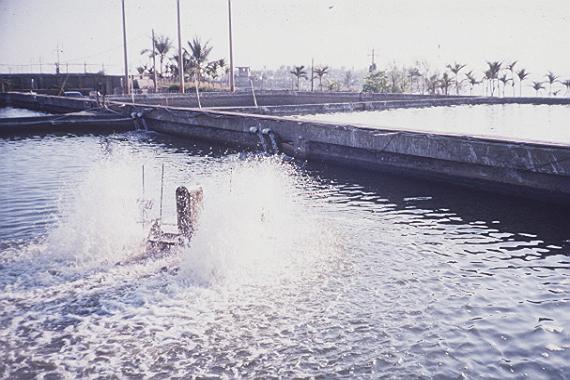
Aeration can be applied on an emergency, nightly or continuous basis to supplement natural sources of dissolved oxygen, reduce stress in shrimp, and prevent shrimp mortalities. Aeration increases the potential for shrimp production, and if stocking and feeding are not excessive, aeration can prevent oxygen stress and result in better feed conversion. When stocking and feeding rates are increased to take advantage of the additional oxygen supplied by aeration, concentrations of toxic metabolites, and especially ammonia, will increase. Water exchange, therefore, is critical in intensive shrimp culture. Unless water exchange is adequate, high ammonia concentrations will stress shrimp and reduce the benefits of aeration (Boyd & Fast, 1992). Aeration also circulates pond water and provides more uniform distribution of water quality variables. In addition, circulation improves dissolved oxygen concentrations at the pond bottom. This helps decompose organic detritus and reduces hydrogen sulfide production at the soil-water interface. Recently devices that circulate pond water but provide a minimum amount of aeration have been developed, e.g. air lift pumps and slow-speed, low-head pumps. These devices blend and circulate pond water to provide a uniform environment, and they consume considerably less energy than aerators (Boyd & Fast, 1992). |