
|
|
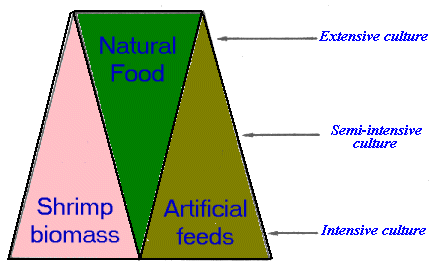 |
When the natural food is abundant, the demand for artificial feeds is considerably less. This is observed when the crop biomass is still small, such as during the initial weeks in high density culture or during the first one or two months in low density culture (Cruz, 1991). Strictly speaking, the primary productivity of a pond has no direct effect on actual feeding rates. The feeding rates remain unchanged although the computed feeding level based on the demand may appear to drop as a result of natural food consumption. In general, feeding rates when based on demand increases with smaller pond sizes and higher stocking densities (Cruz, 1991). |